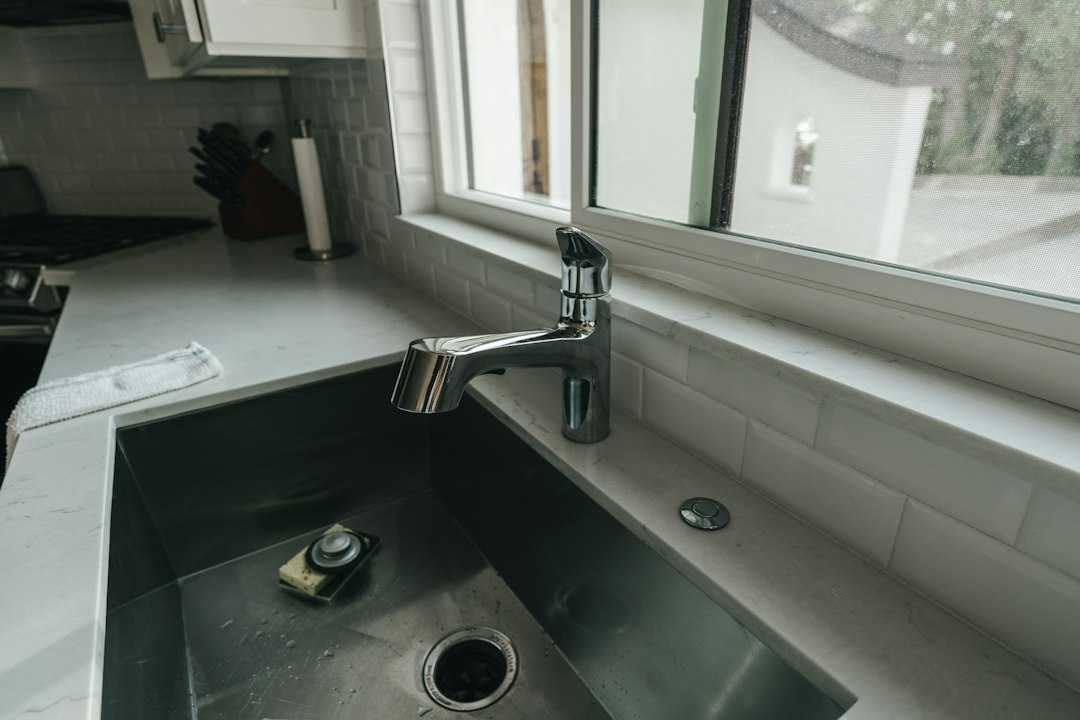
Leftover stone is the part of a kitchen job nobody plans for and a surprising number of people could use. Every time a fabricator cuts a kitchen out of a full slab, pieces come off the saw that are too small for another kitchen and far too good for a dumpster. They go on a rack at the back of the shop, standing on edge, tagged with a lot number and slowly taking up room somebody wants back.
A remnant is simply an offcut. The strip that was left beside a sink cutout, the corner that fell outside an island shape, the end of a run that stopped two feet short of the slab edge. It is the same stone, from the same quarry block or the same production batch, with the same polish on its face. The only difference between a remnant and a slab is the size of what is left and the fact that some of its edges are raw saw cuts.
Stone yards around Asheville move a steady volume of kitchens, which keeps the racks refilling, and a small counter installation in a laundry room, a powder room or a shop break area can usually be served from one of those pieces rather than from a new slab. The older houses in Montford and West Asheville are full of exactly the rooms this suits: narrow bathrooms, butler's pantries, a back hall with a utility sink, a mantel shelf that was replaced badly in the eighties. Knowing how the racks work, what the pieces are honestly good for, and what to check before one is tagged is the difference between a clean small job and a slab of stone standing in a garage for a year.
Where a Leftover Piece Comes From
Fabricators do not produce remnants on purpose. A kitchen is nested onto a slab to get the most usable square footage out of it, and whatever falls outside those shapes is what remains. That has two consequences worth understanding before any shopping happens.
The first is that remnant inventory is random. What is on the rack today reflects which kitchens were cut last month, not what anyone asked for. Walking in with a fixed material and a fixed color in mind often ends in disappointment, while walking in with a size and a tolerance for three or four acceptable looks usually ends with a piece.
The second is that shops genuinely want the space. A rack full of offcuts is floor area that could hold working slabs, and pieces get moved, slid and bumped every time somebody digs for the one underneath. That is why the condition of a remnant is a real question rather than a rude one.
Offcuts are not seconds
A remnant is not a reject. A rejected slab is one with a structural flaw, a bad repair or a defect in the polish, and it is sold as such or sent back. An offcut passed every check the kitchen it came from passed. What it may have picked up is handling damage from life on the rack, which shows at the corners and along the edges rather than in the middle of the face.
The Jobs a Short Piece Is Sized For
Some projects are nearly made for this route:
- A bathroom vanity top, single or double, which is the most common remnant job of all.
- A laundry room folding surface over a base cabinet run.
- A bar, coffee station or beverage area in a pantry or an office break room.
- A fireplace hearth or a short mantel shelf.
- Window stools in a bay, or a shelf inside a shower niche.
- A pastry or baking slab set into one section of a larger wood counter.
- A small desk return or a built in window seat cap.
The jobs that go badly are the ones that need length. Stitching a full kitchen out of three remnants looks like a thrifty idea on paper and almost never reads well in the room, because the lots will not match perfectly and the seams land wherever the pieces ended rather than where a layout would have put them. Mixing materials on purpose, a wood main run with a single stone baking section, is a design decision and works. Mixing them by accident, trying to fake one continuous counter, does not.
Depth is the dimension that decides
Length is what people measure first, and depth is what disqualifies most pieces. A kitchen counter needs a finished depth of roughly twenty five and a half inches once the overhang past the cabinet face is included. A standard vanity wants about twenty two. Many remnants are strips of twelve to eighteen inches that came from behind a sink or along a slab edge, which rules out a kitchen or a vanity but makes them ideal for a hearth, a sill, a shelf or a narrow bar.
Measure the cabinet run, add the overhang, and carry both numbers written down. A tape measure in a yard full of good looking stone is worth more than a good memory.
Reading a Piece in the Rack
Ask the yard to pull the piece out and stand it where there is light. Then look at it properly rather than at the pretty part.
Sight along the polished face at a low angle. Rack life leaves fine scratch clusters and dull patches where pieces have slid against each other, and low light finds them when straight on light hides them. Check every corner for chips, since corners take the knocks. Run a fingertip along the finished edges, if it has any, to feel for small bites out of the arris.
Then look at the back. Fragile stones and many quartzites ship with a fiberglass mesh and resin backing, which is normal and tells a fabricator to handle the piece with care. Look for any line that runs through the full thickness and shows on both faces, which is a crack. A fissure that appears on the surface and not on the back is a natural feature of the stone and is usually nothing.
Ask what it was cut from, and when
Two questions tell a lot. What slab did this come from, and is there any more of it? If the answer is that a second offcut from the same slab is on the rack, a double vanity or a vanity plus a matching hearth becomes possible. For engineered quartz, ask for the batch or lot code. Two pieces sold under one color name from different production runs can differ enough to notice side by side, which matters if the goal is matching something already installed in the house.
The Cut Edges Are Raw
At least one edge of any remnant is a saw cut with no profile and no polish. That is fine, and it is also the part people forget to budget time for. The exposed edges of the finished top have to be shaped and polished, and that is fabrication work on a machine, not something that happens in the room.
If the piece already carries a finished edge, find out which profile it is before planning around it. Reusing an existing polished edge saves a step only when the profile matches what the rest of the job wants. Changing a profile removes a small amount of width, which can matter on a piece that was already tight. A simple eased or small radius edge is the practical default on a short top, and a thick mitered apron edge is usually off the table, because that look is built by gluing extra material underneath and there is rarely enough spare.
Sinks and the Narrow Rail in Front
The weak spot in a small top is the strip of stone in front of a sink cutout. On a vanity there may be only a few inches of material there, and a short rail with a long cutout behind it is exactly the geometry that cracks during handling.
A few things ease that. Have the actual sink on site at templating, because an undermount cutout follows the real bowl rather than a drawing. Settle the faucet now too, since the hole count and spacing are cut at the same time, and a widespread set is a different pattern than a single hole. A drop in sink is forgiving on a remnant, because its rim covers the cut. A vessel sink needs only a drain hole and leaves the stone almost intact, which is why it turns up so often on narrow pieces. Where the rail is thin, ask whether rodding or a plywood support deck is advisable, and whether the piece will be moved on edge rather than flat.
Templating still happens. A short top is measured off the finished, leveled, fastened cabinet like any other, and a small piece is less tolerant of a guess, not more.
Hearths, Surrounds and Heat
A hearth is a good remnant job with one material caveat. Engineered quartz is bound with resin, and resin does not love sustained heat or strong sun. Directly in front of a firebox, or in a west facing sunroom, dense natural stone or porcelain is the safer pick. Granite, soapstone and most quartzite take heat well, which is also why soapstone shows up around wood stoves in mountain houses.
The same reasoning rules out most quartz for a porch or an outdoor bar at elevation, where freeze and thaw cycles and ultraviolet exposure both go to work on it.
Matching Stone Nobody Has Seen Yet
A remnant sells itself under shop lighting and then lands in a room with a north window. Take a cabinet door, a spare floor tile and a piece of the backsplash to the yard, and hold them against the stone outside the building if possible. Photograph the piece in daylight, then look at that photo at home in the actual room.
Pattern scale is the other trap. A bold vein that reads as dramatic across a full slab can read as one odd stripe across a two foot vanity, because the piece is too small to show the rhythm. Quieter stone, or a honed finish that lowers contrast, tends to suit short tops better.
Getting a Small Piece Home in One Piece
Smaller does not mean light, and it does not mean casual. A vanity top is still a sheet of stone that breaks when it flexes.
Carry and transport it standing on edge, supported along its length, never flat across a truck bed where every bump puts a bending load through the middle. Pad the contact points with blankets, strap it to something solid, and store it standing against a wall with the base supported and the lean shallow. Two sets of hands for anything beyond a window sill. Plenty of remnants are broken in a driveway rather than in a yard.
Timing a Small Job
Shops fit short work into gaps between kitchens, so flexibility is the currency here. Being willing to take a slow week often moves a small job forward faster than pushing for a specific date in the autumn rush, when every kitchen in the region seems to be scheduled at once.
A remnant is also first come. A conversation is not a hold. Ask for the piece to be physically tagged with a name and a date, get that confirmed in writing, and expect any hold to have a time limit. Pieces disappear while people are deciding.
Settle These Before the Tag Goes On
- Who templates the cabinet, and when, and does that happen before or after the piece is reserved?
- Which edges are being profiled and polished, and to what profile?
- Is the sink cutout and the faucet drilling part of the work, and does the sink need to be on site?
- Does anyone disconnect and reconnect the plumbing on a vanity, or is a plumber needed?
- Who removes and hauls away the old top?
- What is the lot or batch code, and is a second matching offcut available?
- Is there handling damage already on the piece, noted and agreed before it moves?
Answer those and a leftover piece of stone stops being a bargain hunt and becomes an ordinary, well planned small project. The stone itself was never the compromise. The only thing that was ever smaller was what was left of the slab.